



Skip the story
Portfolio & StoryNew York, NY
Begad Alymany

Begad Alymany

Studying
Computer Science and Mathematics
At
New York University · Courant Institute of Mathematical Sciences
Graduating
Class of 2028
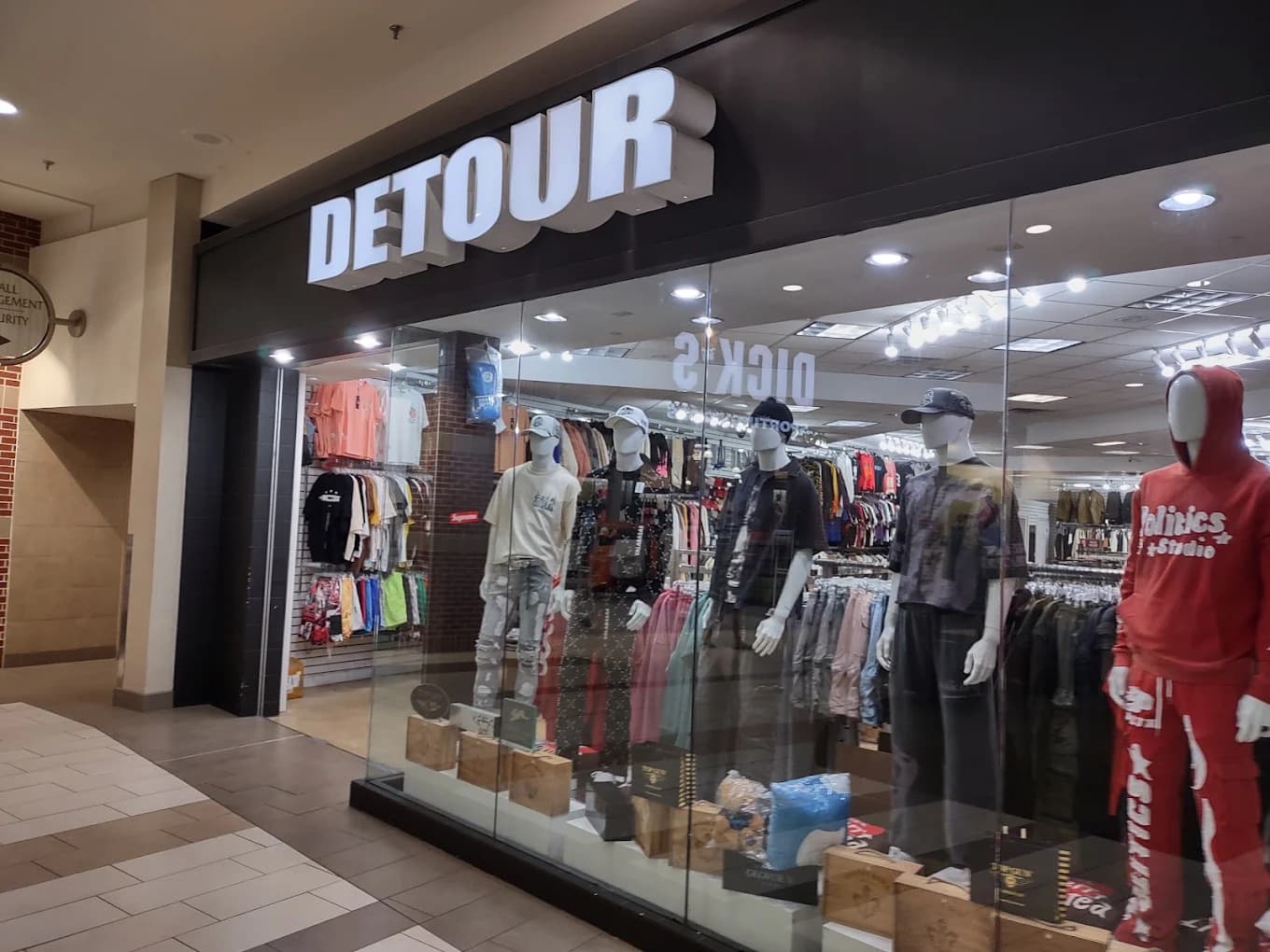
Detour, the family clothing store in Chattanooga, Tennessee
Chapter 012014 — Present

Detour

My dad's store · Chattanooga, TN

My dad opened Detour in Chattanooga, and I grew up inside it. I was behind the counter before I could drive — counting inventory, working the register, learning what it actually costs to keep the lights on from the person paying for them.

As I got older I got more useful. I built out the store's Shopify storefront and its whole digital presence, and helped launch a private label that now manufactures between the US and Egypt.

Everything I know about running something real, I learned in my dad's store first.

Shopify logo
Chapter 022020 — 2024

E-commerce

Shop Amario · Founder

I wanted to know whether I could do it without the family name behind me, so I built Shop Amario from nothing. Multiple product lines hit five-figure weeks, and I ran all of it — sourcing, supplier lead times, the support inbox at midnight.

Alongside it I ran a small digital marketing and web studio: mobile-first, SEO-optimized sites with embedded AI chat and copy for local clients, and the analytics dashboards to prove the work was paying for itself.

Building something and being able to sell it are two entirely different skills.

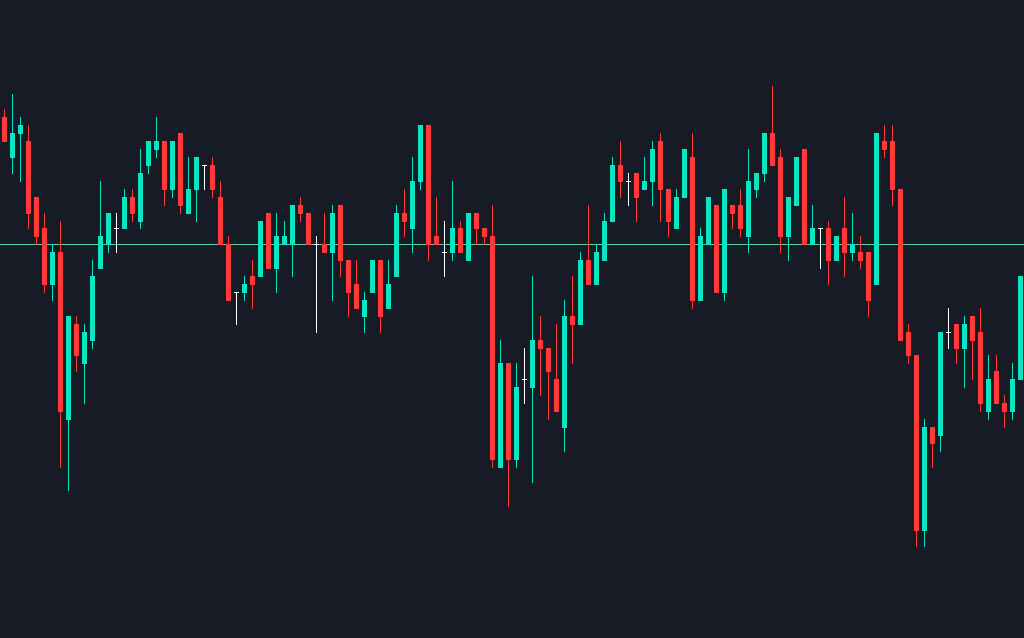
A Forex candlestick chart from the automated trading systems Begad Alymany built in MQL5 and Python
Chapter 032024 — Present

Algorithmic Trading

MQL5 & Python · Live capital

Selling physical products means you are the system. I wanted to build one that could run without me, so I started writing automated Forex strategies in MQL5 and Python.

Those systems now trade across $100K to $1M+ in live capital and clear $10K+ in monthly P&L, with live API integrations, hard risk controls, and walk-forward backtesting standing behind every rule.

Real money changes how you write code. A bug isn't a failing test — it's a drawdown.

University of Tennessee logo
Chapter 042024 — 2026

Tennessee

I started a Computer Science degree at the University of Tennessee on a Chancellor's Honors scholarship, expecting a fairly normal four years. Instead everything compounded at once.

I joined Dr. Liu's lab building physics-based tissue simulations in NVIDIA Isaac Sim, so surgical robots could be tested before they ever touched hardware. And somewhere in the middle of a full course load, I founded two AI companies, Acronix and Medarix.

By the spring I was carrying coursework, research, two companies, and my first internship at the same time.

Nothing in that list waited politely for the others to finish.

GBCS SkyIt Services logo
Chapter 05March 2026 — May 2026

GBCS SkyIt

Software Engineer Intern · Aviation Technology

That spring I took my first engineering job inside someone else's codebase: front-end work on a web-based aviation fleet management platform, in TypeScript and modern component frameworks.

I worked with backend engineers to wire the interface to live APIs and real data, and found out what code review and sprint planning actually feel like when you are the newest person in the room.

Everything I had built before this was mine to decide. This was the first thing that wasn't.

Transcard logo
Chapter 06June 2026 — August 2026

Transcard

AI Engineering Intern · Fintech Payments

Over the summer I was an AI Engineering Intern at Transcard, building production AI inside a fintech payments platform. I rebuilt the multi-agent chatbot pipeline — grounded retrieval, intent routing, memory that survives a turn — and shipped it.

Then I closed a critical gap analysis on the platform's shared AI safety library and found real production risk the test suite couldn't see, including a dispatcher path that silently bypassed every downstream safety control. The rest of the summer went into security and authentication hardening across the platform.

Build the system. Then make it trustworthy enough to run on its own.

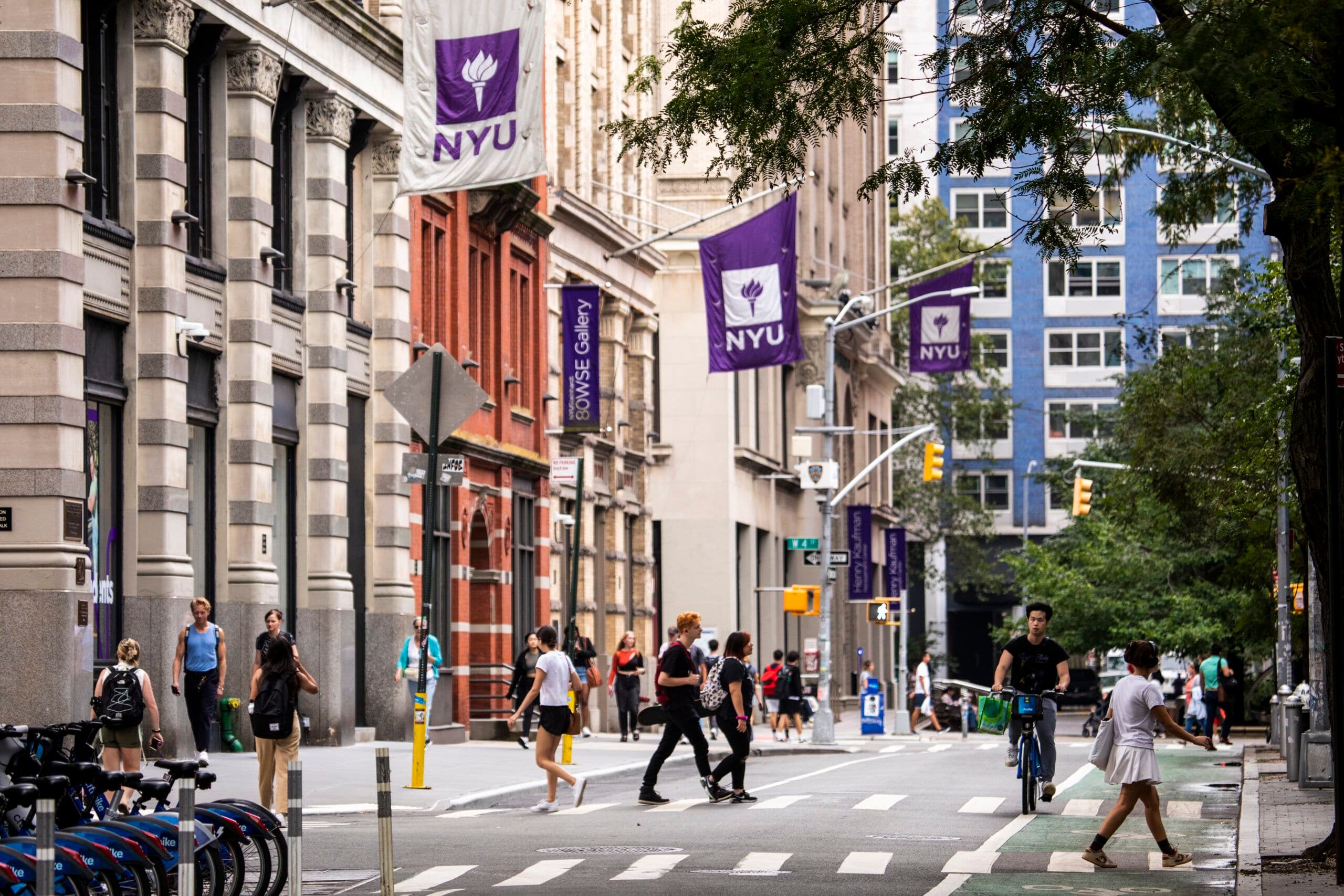
New York University's Courant Institute of Mathematical Sciences, where Begad Alymany studies Computer Science and Mathematics
Chapter 072026 — Present

New York

I could have stayed. Tennessee was working, and that was exactly the problem.

So I transferred to NYU's Courant Institute of Mathematical Sciences to study Computer Science and Mathematics with the Class of 2028, because the interesting question was never how comfortable I could get — it was how far the math would take me.

That is where I am now: in New York, still running Acronix and Medarix, still trading, and looking for the next thing hard enough to be worth the move. Here is what that has looked like so far.

Go further, or stay comfortable. You don't get to do both.

End of story

Everything above is why.
Everything below is what.

The companies I run, the things I’ve built, the tools I build them with, and how to reach me.

Companies

Two companies, founded as a student

Both are AI products with a hard constraint in front of them — unit economics in one, patient safety in the other.

Acronix

FounderOperating

AI ops software for mid-market service businesses

A per-client AI automation platform for verticals like freight brokerage, insurance, and property management, built on a shared component library plus per-client customization so each deployment is bespoke without the codebase forking.

Runtime cost was the constraint that decided whether the unit economics worked, so I cut it 60–90% with tiered model routing, prompt caching, and batch inference.

MRR
5-figureMRR
AI runtime cost cut
60–90%AI runtime cost cut
verticals served
3verticals served
  • Next.js
  • TypeScript
  • Supabase
  • Model routing
  • Batch inference
Acronix platform architecture diagramThree client verticals — freight brokerage, insurance, and property management — each sit on their own thin customization layer, and all three connect down into a single shared core platform containing the agent runtime, model router, prompt cache, and batch inference.FreightbrokerageInsuranceagenciesPropertymanagementper-clientcustomizationper-clientcustomizationper-clientcustomizationShared core platformone codebaseAgent runtimeModel routerPrompt cacheBatch inference
One shared core, many client surfaces — customization lives at the edges, never in the platform.

Medarix

FounderBuilding

HIPAA-compliant AI for medical claim appeals

A constrained state-machine pipeline that autonomously drafts payer denial appeals: deterministic parsing on the way in, an LLM only where language is actually the work, and a mandatory physician sign-off before anything leaves the system.

The whole pipeline runs inside an Azure AI Foundry compliance boundary, so the model never becomes the thing standing between a patient and a decision.

unreviewed submissions
0unreviewed submissions
compliance boundary
HIPAAcompliance boundary
human gate, always
1human gate, always
  • Azure AI Foundry
  • State machine
  • Deterministic parsing
  • Human-in-the-loop
Medarix appeal pipeline architecture diagramA left-to-right pipeline inside an Azure AI Foundry compliance boundary: a denial packet is parsed deterministically, an appeal is drafted by a language model, a physician must sign off, and only then is the appeal submitted to the payer. A rejected draft loops back to the drafting step.Azure AI Foundry compliance boundaryHIPAArejected → redraftDenialpacketDeterministicparseLLM-draftedappealrequired gatePhysiciansign-offSubmit topayerdeterministicmodel-generatedhuman decision
A linear pipeline with a hard human gate — the model drafts, a physician decides.

Projects

Things I built and shipped

Trading infrastructure, applied ML, research simulation, and small tools that solved a problem I actually had.

Quant/ML Trading Systems

2024 — Present

Automated Forex trading systems in MQL5 and Python generating $10K+ in monthly P&L, deploying strategies across $100K–$1M+ in live trading capital with live API integrations, risk controls, and walk-forward backtesting.

  • MQL5
  • Python
  • Trading Automation

Soft-Tissue Surgical Simulation

2025 — 2026

Research in Dr. Liu's surgical robotics lab: physics-based soft-tissue simulation in NVIDIA Isaac Sim, using Neo-Hookean hyperelastic models and 3D heightfield visualization so a robotic surgical arm could be tested against tissue that deforms and recoils the way real tissue does — in simulation, before anything touched hardware.

  • NVIDIA Isaac Sim
  • Neo-Hookean FEM
  • Python

ML FX Signal & Alert System

2024

A Forex candlestick direction predictor in Python using pandas and XGBoost, paired with a Telegram bot for live trading alerts and an ATR-based backtester with session filters.

  • Python
  • XGBoost
  • Telegram API

SnapStudy

2024

A Next.js, React, and TypeScript app built on the Google Gemini API that turns photos of handwritten notes into structured study outputs, deployed on Vercel with exportable quizzes.

  • Next.js
  • TypeScript
  • Google Gemini API

Transfr AI

2026

A JavaScript Chrome extension that extracts and transfers full conversation context between AI platforms in one click, for when usage limits or performance issues force a switch mid-thread.

  • JavaScript
  • Chrome Extension

Skills

What I build with

Listed the way a resume lists them, because that is what this section is for.

Languages
  • Python
  • TypeScript/JavaScript
  • C#
  • C++
  • SQL
  • MQL5
Web / Infra
  • Next.js
  • React
  • Blazor
  • .NET
  • Flask
  • FastAPI
  • Tailwind
  • Postgres (Supabase)
  • SQL Server
  • Vercel
AI / ML / Cloud
  • PyTorch
  • Azure OpenAI
  • Semantic Kernel
  • Azure AI Search
  • scikit-learn
  • XGBoost
  • NVIDIA Isaac Sim
  • NVIDIA Warp
  • Azure DevOps
  • Azure Key Vault
  • xUnit
  • Git

Contact

Let’s build something.

begadten@gmail.com